
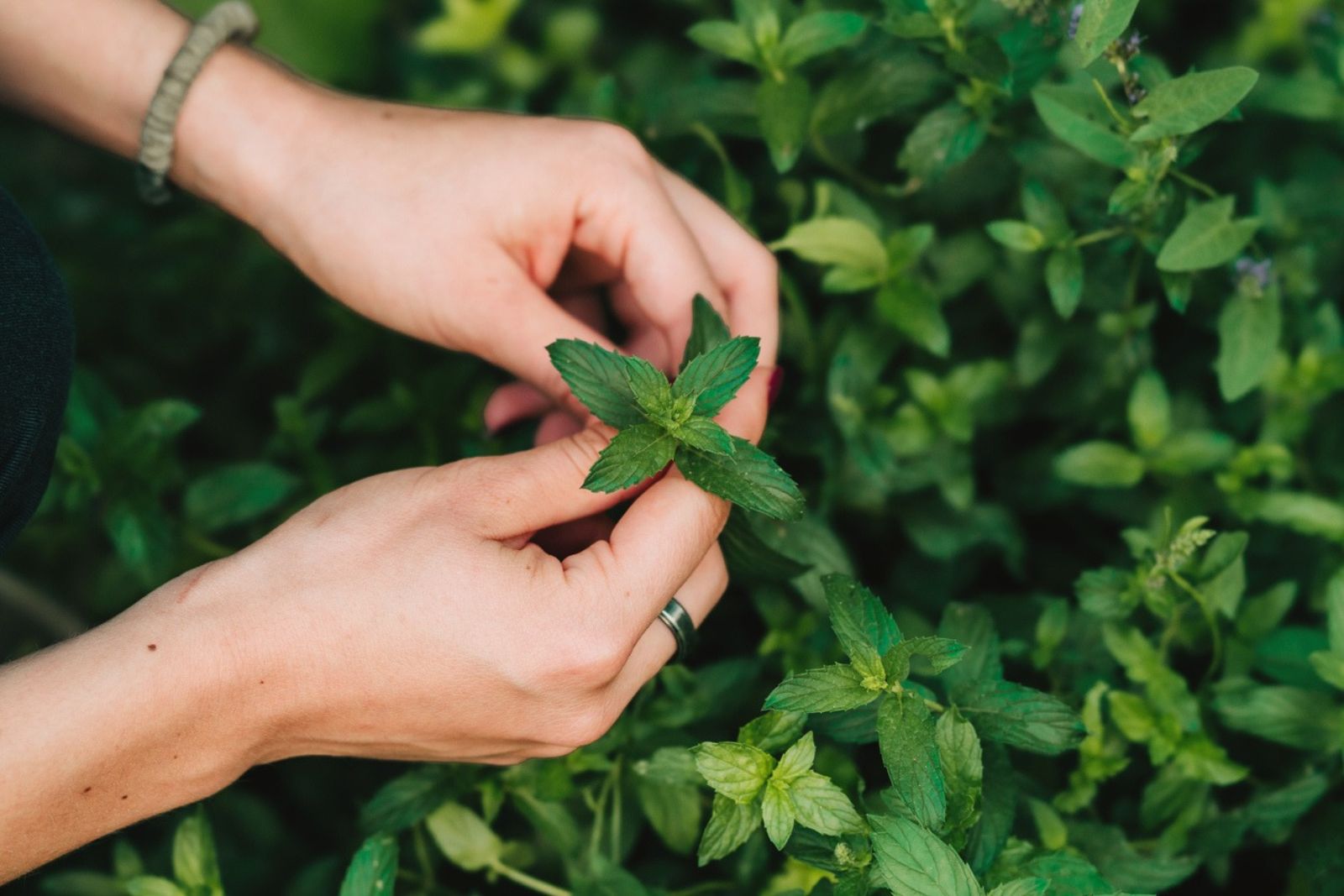
In October, you potted up some mint from the garden and set it on the kitchen counter, imagining fresh sprigs for tea all winter. By January, the stems are long and spindly, the leaves are small and pale, and the whole plant leans toward the window like it’s trying to escape.
This is not your fault. Most herbs struggle indoors in winter for one main reason: they don’t get enough light. Iowa State University Extension says most herbs need around eight hours of direct light a day when grown indoors. Illinois Extension’s Brittnay Haag puts the minimum at six hours of direct sunlight, and University of Maryland Extension recommends a spot with at least five hours of sun. A kitchen counter a few feet from the glass rarely gets close. The good news: mint is on Iowa State’s list of the best herbs to grow indoors.
Table of Contents
Why indoor herbs stretch and fade
Winter days are short and the sun sits low, so even a sunny room gets far less light than a garden bed. Herbs respond by stretching toward the brightest spot, which leaves weak stems and sparse leaves. Dry indoor air and soil that stays wet too long add to the stress.
That’s why the window matters as much as the watering can. Iowa State calls a south-facing window a great candidate, and says a bright east- or west-facing window can work as well. University of Maryland Extension points to south or west windows.
How to keep mint growing until spring
- Use your sunniest window. Set the pot right at the glass of a south-facing window if you have one, or a bright east or west window.
- Add a grow light if the sun falls short. Iowa State suggests placing lights 6 to 12 inches from the leaves and running them 12 to 16 hours a day on a timer. Illinois Extension recommends 12 to 14 hours under fluorescent lights, and Maryland Extension says 14 to 16 hours may be necessary in winter.
- Keep the room comfortable, not hot. Illinois Extension says optimal growing temperatures are 60 to 70°F. Maryland Extension advises keeping herbs away from drafts, dry heat vents and temperature extremes.
- Raise the humidity. Both Illinois and Maryland Extension suggest setting the pots on a shallow tray of pebbles and water. Maryland also mentions daily misting.
- Water with restraint. Iowa State says to let the soil dry between waterings, since most herbs don’t tolerate wet soil. Use a container with good drainage, and consider terracotta, which dries out more readily.
- Harvest from the top. For perennial herbs such as mint, Iowa State recommends removing the top one-third of growth, which keeps the plant compact.
If you’re bringing mint in from outdoors, timing helps. Maryland Extension notes that mint, chives and tarragon benefit from a light frost before being moved indoors, which gives them a rest period and firmer new growth. The same bright, plant-filled feel is what makes these sunroom ideas work so well in winter.
Where indoor herbs fall short
Not every herb is as forgiving as mint. Iowa State lists rosemary, sage, lemon balm, marjoram, chervil and bay laurel as harder to grow indoors, because they need more light or are more prone to pests like spider mites. Parsley, chives, basil, oregano, cilantro and thyme are better bets.
For feeding, Maryland Extension recommends periodic light fertilizing rather than heavy doses. And check the plants regularly for pests, especially if you grow the harder herbs alongside your mint.
Bright window, a timer on the grow light and soil that dries between drinks. That’s the trick.
WHAT DO YOU THINK?