
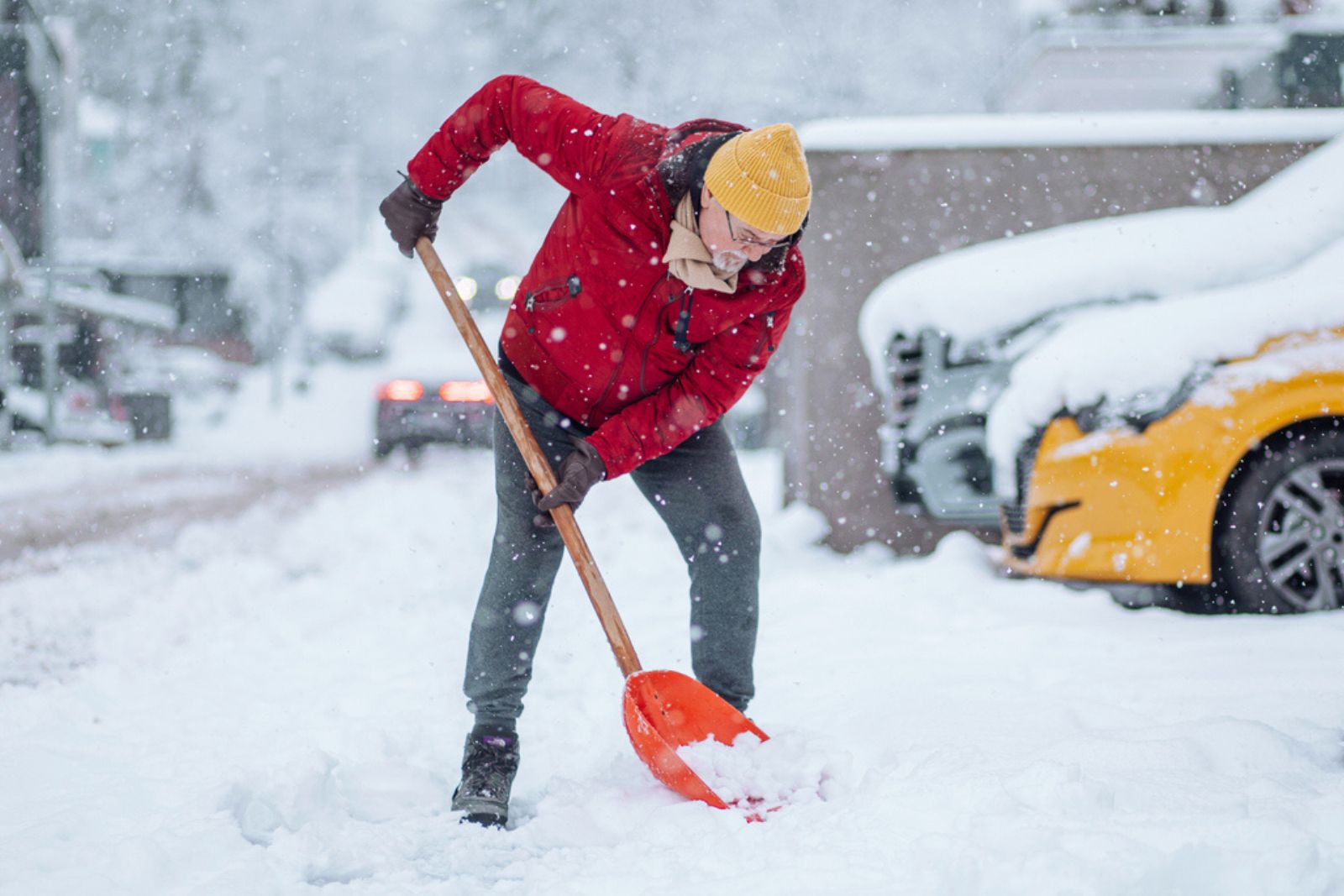
The first heavy snow of the season falls overnight, and by 7 a.m. you’re out on the driveway with a shovel, lifting wet, heavy loads and tossing them onto the lawn. Ten minutes in, you’re breathing hard, your chest feels tight and your arms are burning, and you tell yourself you just need to push through and finish.
This is not your fault. Shoveling feels like a chore, not a workout, so few people think of it as hard exercise. But it is. Barry Franklin, a professor of internal medicine at Oakland University William Beaumont School of Medicine and lead author of the American Heart Association’s 2020 scientific statement on exercise-related cardiovascular events, puts it this way: “The strain of heavy snow shoveling may be as or even more demanding on the heart than taking a treadmill stress test.” What follows is general information, not medical advice.
Table of Contents
Why shoveling is so hard on the heart
The AHA explains that several things happen at once. Cold temperatures may increase blood pressure while constricting the coronary arteries. Shoveling is mostly static arm work, which is more taxing on the heart than leg work. Holding your breath while lifting raises heart rate and blood pressure, and standing still lets blood pool in the legs, so less returns to the heart.
The numbers are striking. In one study cited by the AHA, participants’ heart rates exceeded 85% of their maximum after only two minutes of shoveling. Franklin estimates that hundreds of people in the U.S. die each year during or just after snow removal.
Who should hand off the job
The AHA says the risk is especially concerning for people who already have cardiovascular risks, and that the impact is hardest on those who are least fit. Its advice for people with known or suspected heart disease or risk factors is to get someone else to do the snow removal. Risk factors it lists include a sedentary lifestyle, obesity, current or former smoking, diabetes, high cholesterol and high blood pressure.
For some people, the answer is a firm no. Franklin says that those who have had bypass surgery or coronary angioplasty “simply should not be shoveling snow,” and the AHA adds people who have had a heart attack or stroke to that list. If you’re unsure where you fall, ask your doctor before the next storm, not after.
How to shovel more safely
If you do shovel, the AHA recommends these precautions:
- Start slowly and pace yourself. Take it easy and build in short breaks.
- Push, don’t lift. Pushing or sweeping snow is easier on the body than lifting and throwing it.
- Cover your mouth and nose. Dress in layers, with a hat and gloves, and take extra care when it’s windy, since wind makes the cold feel more intense.
- Consider a snow blower. Research cited by the AHA found heart rates around 170 while shoveling, compared with around 120 with a snow blower. Pushing a snow blower can still raise heart rate and blood pressure, so stay mindful of how you feel.
- Stop at the first warning sign. Chest pain or pressure, lightheadedness or heart palpitations mean you stop immediately.
The AHA says to call 911 if symptoms don’t subside shortly after you stop. If someone collapses, call for help and start Hands-Only CPR if they are unresponsive with no pulse.
Clearing snow can also mean helping someone else. If you have a neighbor with heart disease, offering to do their walk may be the most useful thing you do all winter. And once the steps are clear, the porch can get its holiday look, like the snowy cottage setups in these Christmas porch ideas.
Know your risk, push instead of lift, and stop when your body says stop. That’s the trick.
WHAT DO YOU THINK?