
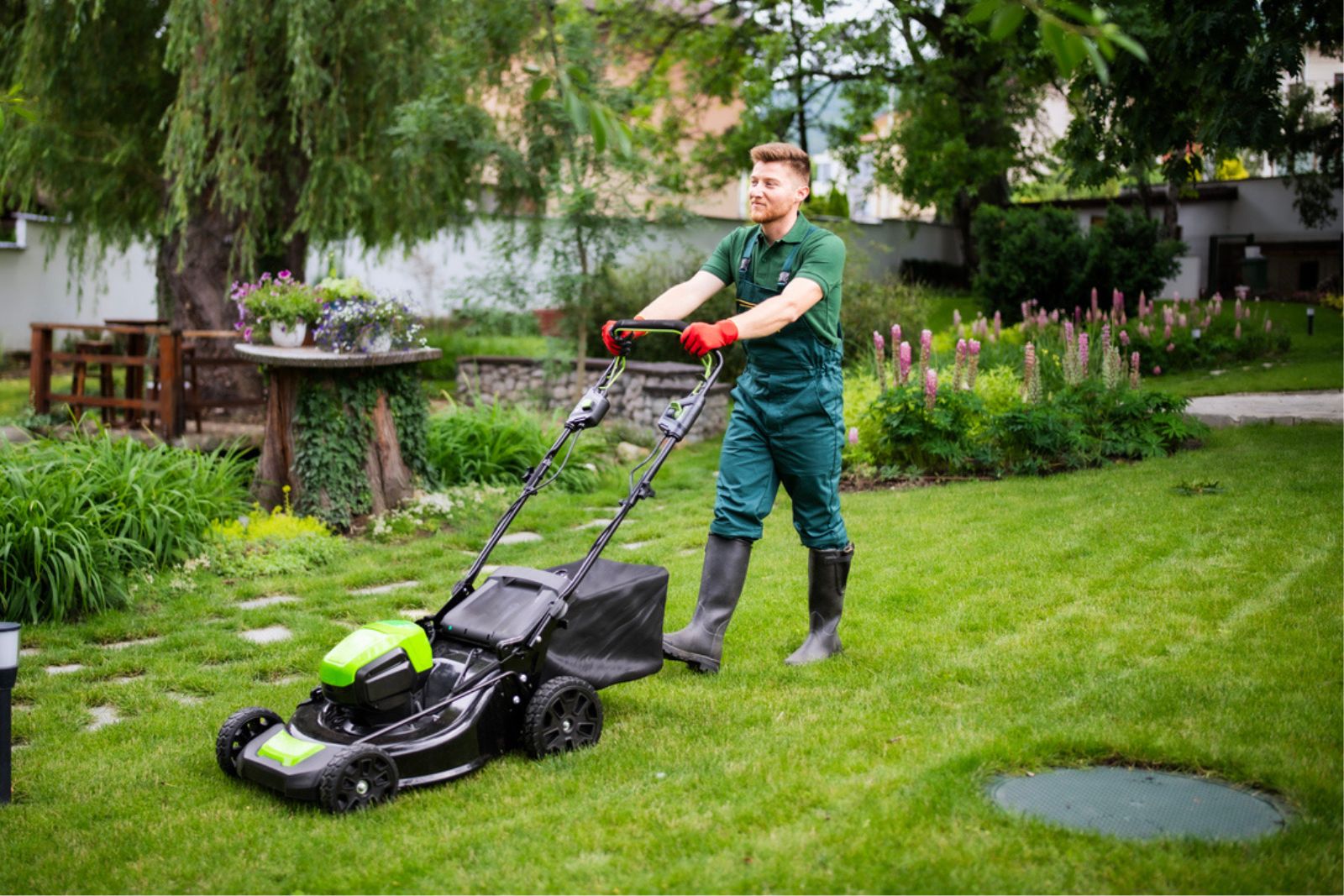
The grass seems to slow down in November, so you park the mower for the season and let the lawn go into winter a little long. When the snow finally melts in spring, you find matted, straw-colored circles across the yard, some of them crusted with a gray or pink fuzz.
This is not your fault. Leaving the grass long feels like giving it extra protection for winter. But lawn experts recommend the opposite for the last cut. University of Minnesota Turfgrass Science advises lowering your mowing height by 0.5 to 1.0 inches with your final mowing, to a final height of about 2.0 to 3.0 inches. One reason is snow mold.
Table of Contents
Why long grass and snow are a bad mix
Snow mold is a fungal disease that shows up as the snow recedes. Richard Latin, a professor of plant pathology at Purdue University, writes that gray snow mold requires snow cover for infection and patch development and is favored by cold, wet conditions of 32°F to 36°F. University of Illinois Extension lists excessive debris, such as leaves or straw, on the turf as a risk factor.
That’s why the final cut matters. Minnesota presents the lower final height as one of the steps that help set the lawn up for success, along with dealing with leaves.
How to handle the last mow of the season
- Keep mowing until the grass stops growing. Illinois Extension recommends continuing to mow until grass is completely dormant in fall.
- Lower the deck for the final cut. Drop the height by about half an inch to an inch, as Minnesota recommends. Illinois Extension suggests a final height of about 2 inches, and NDSU Extension agent Don Kinzler also recommends lowering to about 2 inches to help prevent snow mold.
- Time it before lasting snow. Kinzler says to cut the grass shorter before the first snowfall that sticks around.
- Stay within the range. Minnesota’s guidance is to lower by 0.5 to 1.0 inches, not to cut the lawn down to the soil.
- Deal with heavy leaf cover. Minnesota notes that mulching or removing excessive leaf litter can help reduce snow mold pressure.
- Go easy on fast nitrogen. Illinois Extension flags excessive fast-release nitrogen fertilizer in early to mid-fall as a risk and recommends slow-release or controlled-release nitrogen.
A tidy lawn going into winter also makes the yard easier to enjoy once spring comes, like the stone-edged lawns in these backyard garden ideas.
What a short final cut can’t do
Mowing height helps, but it doesn’t guarantee a lawn free of snow mold. Minnesota notes that snow cover and temperature also play a role, and Illinois Extension says areas with drifting snow or piled snow are more prone to it. If patches do appear in spring, Purdue’s Latin notes that raking the matted turf can help it recover faster.
These recommendations come from northern extension programs in snowy climates. If you live in the South, check with your local extension office for your grass type. Drop the deck, mow before the snow sticks and keep leaves off the grass. That’s the trick.
WHAT DO YOU THINK?