
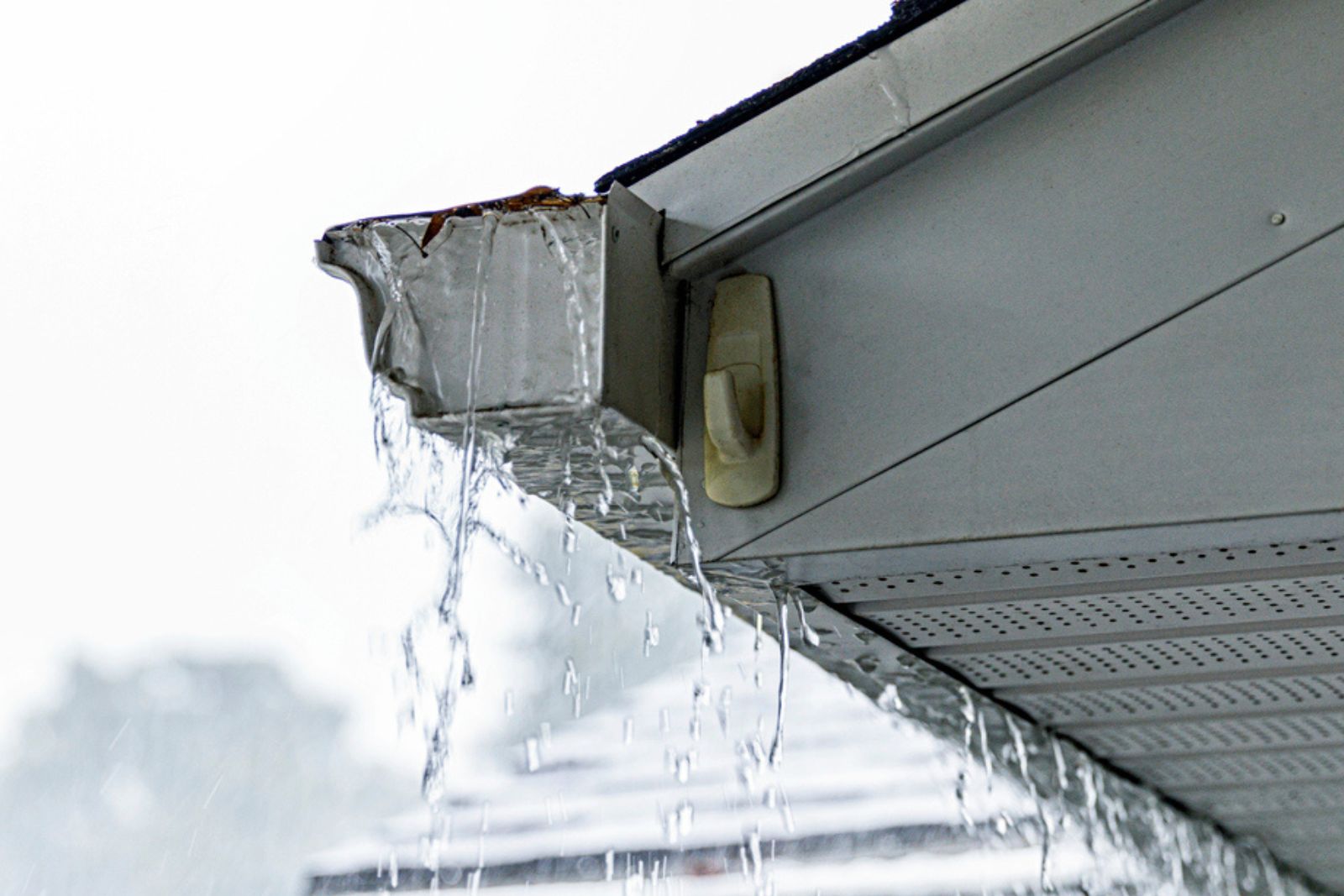
Every time it storms, the same thing happens at the corner of the house. The downspout dumps a gush of water onto a splash block, the mulch washes out, a muddy rut forms along the foundation and the bed you planted in spring looks like a ditch by fall.
This is not your fault. Downspouts are built to move water fast, not to look good doing it. Alicia Springer, a UC Master Gardener in Butte County, California, has noted that we tend to send rainwater from the downspout to the storm drain as directly as possible. Two ideas turn that runoff into something worth looking at: a rain chain at the top and a dry creek bed at the bottom.
Table of Contents
Why the water ends up in the wrong place
The goal is to get water away from the house and into the soil instead of letting it pool. University of Nebraska-Lincoln Extension specialists Thomas G. Franti and Steven N. Rodie advise locating rain gardens “at least 10 feet away from the house to avoid water draining toward the foundation.” They note that a small swale can often carry the water from a downspout to the rain garden, or a buried pipe can do the job if a swale isn’t desirable.
That swale is where a dry creek bed comes in. UC Agriculture and Natural Resources describes a swale as a shallow channel, bermed a bit on both sides, that directs water away from structures, adding that “A rock-lined swale resembling a dry creek bed holds visual interest throughout the seasons.”
How to build the look
- Swap the downspout for a rain chain. Known as kusari-doi in Japan, rain chains have channeled rainwater for centuries, according to This Old House, which puts the cost at $50 to $100.
- Pick cups for heavy rain. This Old House says link chains suit moderate rainfall, while cup chains handle heavier downpours.
- Give the chain a landing spot. Ask This Old House landscape contractor Roger Cook suggests digging a hole at least 6 inches deep, filling it with 3/4-inch stone or gravel and setting a pot with drainage holes on top. A rain barrel can also sit underneath.
- Dig the creek bed. UC ANR says the channel should be at least 6 inches deep and lined with grasses, gravel or river rock for the dry creek effect. A Clark County Master Gardeners guide suggests making a dry stream bed about twice as wide as it is deep.
- Layer the rock. The same guide recommends lining the channel with landscape fabric, placing small and medium stones along the center, larger rocks along the edges and big boulders at the bends.
- Finish in a rain garden. UNL notes that a typical residential rain garden is 100 to 300 square feet and 4 to 8 inches deep. Test the soil first: dig a hole 6 inches deep and fill it with water. If it drains in less than 24 hours, the soil is suitable.
One of these sloped yards held up by natural boulders even works a dry creek of river rock into the design.
When this setup needs a rethink
Rain chains have limits. This Old House notes that as long as they remain unclogged, downspouts will almost always perform better, and that chains can be damaged or rendered ineffective by high winds. Roger Cook adds that chains tend to splash during downpours, so they’re best suited to houses with deep overhangs. In cold climates, Homes & Gardens garden editor Rachel Crow warns that a frozen rain chain can become too heavy for its support, and suggests taking it down and storing it over winter.
Placement matters too. UNL recommends gently sloping or flat ground, an alternate site if the slope is greater than 12 percent, at least 25 feet from a septic system, and awareness of underground utilities. If water will flow through the channel year-round, the Clark County guide suggests checking with local authorities about permits.
Slow the water at the gutter, guide it through rock and let a rain garden soak it up. That’s the trick.
WHAT DO YOU THINK?